Thursday, October 29, 2020

Ebigambo bya pasita Yiga ebyewuunyisa

Ebigambo bya pasita Yiga ebyewuunyisa


1 Mu March wa 2020 nga Pulezidenti Museveni aggadde amasinzizo olw'okulwanyisa COVID-19, Yiga yagamba nti, ‘Abasumba ffenna tuli bakozi ba bbizinensi era ekkanisa zaffe kwe tulya.

Kati bw'aziggala nga ne COVID- 19 gw'ogamba taliiyo mu Afrika, obeera otegeezaki.' Bino byamuviirako okuggalirwa mu kkomera e Kitalya gye yamala ennaku 38.

2 Nga 16 January, 2019 bwe yali e South Afrika ng'atangaaza ku baali bamubika, Yiga yagamba nti, ‘Ssaasoma naye neebaza mukama okumpa amagezi agasinga n'abaasoma, nze kati e South Afrika nkozesa n'Abazungu naye mwe Bannayuganda abanjerega olw'obutamanya Luzungu ng'ate mmwe abalumanyi n'enjala ebattira awo, mbasekeredde".

3. Mu October wa 2019 bwe yayambala eby'ekisiraamu yagamba nti, ‘Allahu Akbar, Basiraamu baganda bange mbasaba mumpulirize, sirina kibi kyonna kye mbaagaliza wabula Katonda y'omu bwe bubaka bwe mbaleetedde.' Kino tekyalobera Sheikh Nuuhu Muzaata kukulembera Basiraamu kumulagira abeetondere olw'okwambala ebyambalo ebyo nga tamanyi makulu gaabyo. Mu kwetonda yagamba nti, ‘Basiraamu baganda bange, mbeetondera era ndowooza ekyo nakyo kiwedde.'

4 Mu 2015, Yiga yaggulwako omusango gw'obutalabirira mwana gwe yazaala mu Brenda Nalubega eyamulangira n'okumusiiga endwadde enkambwe. Oluvannyuma Yiga yali mu kkanisa ye n'agamba abagoberezi be nti, ‘Hmmm, omulwadde w'endwadde enkambwe (siriimu) ng'oyo bwe yayogedde aba afaanana nga nze? Ahaa, gwe bw'ondaba guno omubiri gulimu akalwadde ako!" Abagoberezi yabassa enseko n'enduulu.

5 Kyokka mu February wa 2019, obulamu bwa Yiga bwatandika okukyuka nga n'okukogga kw'atadde ne bagamba nti siriimu attuse. Ku olwo abo yabaddamu nti, ‘Ebintawaanya nsonga ndala era ng'omusajja naye abajega bagamba siriimu y'annuma! Zibasanze." Ku luno yali munyiivu ddala n'agattako nti, " Bwe nagejja ne bagamba empeke zingezezza kati nkozze bagamba ng'enda kufa, abaffe nze sirwalangako siriimu." Yalaba tebimumalidde enkeera n'ayongerako nti, ‘Ne Basudde gwe mwali muyita omwenzi ow'ebbaluwa teyafa siriimu wabula akabenje ke kaamutta."

6 Mu September wa 2014 waliwo omukyala eyasooka okutwala Yiga ku kkooti y'e Nabweru nga naye amulanga butalabirira mwana. Yiga yamwegaana n'abuuza nti, ‘Sha, omuntu n'agamba nti wali naye emyaka mingi emabega kyokka nga tolina ky'omugambye nti alina omwana wo n'omwekangira mu kkooti nti ayagala DNA, lwaki mutwesibangako okwonoona amannya gaffe. Nze nina erinnya zzito okukira ekyalo naye katukole DNA bajja kuswala.'

7 Nze Yiga siri mufere. Omuntu yenna gwe nafera aveeyo oloope oba annumirize. Emyaka 15 nga nsumba endiga omusiru y'atamanyi kye kitegeeza"

8 Sukuma emboozi" Kano abadde asinga kukakozesa mu pulogulamu ye gyeyatuuma "Kiki kyolifa teweerabidde" ng'abantu banyumya bye bayiseemu.

9 Okumanya abasumba bafere babeera ne saaviisi mu buli kadde ekitegeeza nti tebalina mirimu mirala gye bakola olwo ne bakamula endiga ssente nga ezo zeezibabeezaawo, nkiddamu ffenna tuli bafere era ekkanisa bizinensi ewedde emirimu."

10 Abasumba bonna balina emmotoka ez'ebbeeyi, ennyumba ennungi, ebintu ebyebbeeyi kw'ogatta okutambula amawanga agenjawulo. Ezo ssente ziva wa Yezu.

11 Bwe yasindika abayigirizwa okubuulira abantu ekigambo teyabawa bya kulya wadde ssente z'entambula". 12 Abasumba tukomye okwawula mu bagoberezi nga twesigama ku njawukana wakati waffe ng'abasumba".

13 Kinnyiga omutima okulaba ng'abantu ba Katonda beeyawulamu olw'okuba abasumba tebakwatagana, ekimmalako emirembe kwe kulaba omugoberezi okuva mu kkanisa n'adda mu ssabo"

15 Abasumba bonna bankoppye, bwe baalaba nteeka abantu ku ttivvi ne beeyabya nabo ne batandika okubikola. 16 Omuntu bwe yeeyabya kimuyamba okukkakkana n'eyandyesse abivaako kubanga abeera yeetikudde omugugu"

Wednesday, October 28, 2020

Seychelles gets first opposition president in 43 years

Seychelles' new president, Wavel Ramkalawan, is calling for national unity as he becomes the first opposition candidate in 43 years to lead the East African island nation.

Ramkalawan was sworn into office Monday at the state house after his commanding victory over President Danny Faure during three days of voting last week.

Ramkalawan is the fifth president the archipelago of islands in the Indian Ocean off the east coast of Africa has had. His Linyon Demokratik Seselwa (LDS) party also sealed a majority in the legislature, winning 20 of the 26 seats in the National Assembly.

Vice President-elect Ahmed Afif took the oath of office on Tuesday.


Source

Aba NRM mu Kampala beeyulizza mu lukiiko

Aba NRM mu Kampala beeyulizza mu lukiiko

Olukiiko olwayitiddwa okutabaganya abeesimbyewo ku kkaadi y'ekibiina kya NRM mu Kampala Central n'abo baamegga mu kamyufu kyokka ne batamatira lwaggweeredde mu kweyuza n'okuwaga nti kabattunke mu kalulu ka bonna mu 2021.Mboize

Abakungu okuva ku kitebe kya NRM e Kyaddondo abaakulembeddwa Mike Kennedy Ssebalu baatuuzizza olukiiko ku Hotel Ruch e Nakasero ku Mmande. Omu ku baawangulwa, Max Mboize nga yawangulwa Winnie Madinah Nsegumire ku kifo kya kkansala wa Nakasero III yacwanye nti tasobola kuvaamu ng'alumiriza nti yabbibwa. Yayombye nti eyeeyita omuwanguzi waliwo n'ebifo gy'atasobola kutuuka.

Muky. Nsegumire yafukamidde ne yeetondera Mboize amusonyiwe byonna ebyasoba era asaba amuwagire ku lw'obulungi bw'ekibiina oli n'agaana. Eyali minisita Francis Babu yatabukidde abeeyita aba NRM kyokka ng'omutima gubali ku ludda luvuganya. Yabuuzizza nti, "bw'oba ddala oli wa NRM lwaki yeesimba ku mulala alina kkaadi?"

Yasembye mutabani we Cedric Babu alina kkaadi ya NRM ku ky'omubaka wa Kampala Central ne mukyala we Margeret Zziwa nti buli omu alina eddembe okuvuganya kubanga waliwo ffamire ezizaalibwa nga za bakulembeze. Kyambadde yakkirizza okulekera Babu.


COVID-19: 30,000 learners to miss final exams over inspections

At least 1,334 education institutions have failed to meet Covid-19 standard operating procedures (SOPs) set by the education ministry before they are allowed to reopen.

This comes at a time when the Uganda National Examinations Board (Uneb) has allocated only five weeks, starting October 22 to register candidates at all levels. Last week, Uneb insisted that there will be no room for late registration like in previous years in order to prepare for final exams in March, April and May 2021.

It is estimated that about 30,000 candidates, including those in P7, S4 and S6 have been affected. This implies that schools with candidates that have not been cleared for reopening ought to utilize this short period to register their finalists from other centers with Covid-19 certificates of compliance.

The coordinator of the national inspection exercise, Benson Kule Baritazale, told The Observer that the affected institutions scored 49 per cent and below, thus not authorized to reopen for candidates. Kule, who doubles as the commissioner, Secondary Education Standards, said the inspection focused on two aspects; hand washing equipment and social distancing. So far, all the non-compliant schools are privately-owned.

"In these schools, we found that the administration didn't even have a plan for addressing Covid-19 SOPs. For a few that had drawn plans, they didn't have funds to facilitate the process with basic items such as reliable water, foot-operated hand washing facilities or jerrycans placed in strategic positions at school," Kule said.

In private boarding schools that failed to meet the required standards, inspectors found that the facilities were not commensurate with the agreed SOPs. For instance, some schools had double and triple decker metallic beds instead of allocating one bed per learner. Kule said besides the illegal sleeping arrangement, some proprietors found it difficult to leave the two-meter distance required between each decker in the dormitory.

"We are concerned that learners are moving long distances especially in areas without approved schools. However, where a school is found far below the standard, this is a matter of life and death and we can't compromise standards to see children getting infected at school," he said.

The nationwide inspection covered primary, secondary, BTVET and Teacher Education institutions that were not diploma or degree-awarding and with candidates/finalists. It started on October 5 and officially ended on October 17. Effective October 19 to 23, the DES has been compiling the nationwide inspection report that will be submitted to the education ministry's top management this week for further guidance on follow-up inspections for approved schools.

Institutions that scored 60 per cent and above and complied with the SOPs have been issued with certificates of compliance while those that scored 50 to 59 per cent were categorized as pending and have been given more time to address the missing requirements.

Asked whether the compliance certificates cannot be forged, Kule said: "The certificates are serialized and we know which serial numbers were sent to particular districts and municipalities. It will be unfortunate to find a school with a forged certificate because for government schools, they will face stern disciplinary action and for private schools, a license may be withdrawn."

According to Kule, candidates in institutions that will remain far below the basic requirements and minimum standards in line with the SOPs, will be transferred to the neighbouring institutions which qualified and have space. Where there is no other institution, the ministry shall take appropriate action to ensure that the learners continue with their studies.

INSPECTION FIGURES

As of October 22, out of the 21,817 education institutions that had been inspected nationwide, at least 18,533 (85 per cent) were found compliant with SOPs, 1,950 (9 per cent) pending to be re-inspected, and 1,334 (6 per cent) were found non-compliant.

The western region has the highest number of inspected institutions at 7,074, Eastern 6,125, Central 5,910, and Northern with the lowest figures at 2,708. By percentage, the central region took a lion's share with 90 per cent of its institutions found compliant. In the West, 89 per cent (6,271 institutions) passed the test, East got 84 per cent (5,118 institutions), and North at the bottom with 68 per cent (1,833 institutions).

DES statistics indicate that the Eastern region still ranked high with the highest number of non- compliant institutions at 411. It is followed by the Western region with 371, Northern 340 and Central with 212 institutions. At least 2.5 per cent of the schools have not been inspected countrywide on grounds that; some previously existed as schools but non-licensed, others didn't bother to plan for the inspection while in other locations, inspectors reached schools but "there were no administrators and other proprietors were playing hide and seek due to lack of requirements."

EDUCATION OFFICERS REACT

In some areas, the district education officers (DEOs) blamed failure of private institutions on laxity of proprietors. The DEO Maracha, Flavia Osoa, cited a private primary proprietor in the district who failed to meet the required standards on all the two inspection visits.

"We are still advising this school on what to do because if they are to meet the social distancing guidelines, only two desks can fit in a room. Unless they put up new structures, it's practically impossible because one class can only accommodate four learners. For latrines, they are full and occasionally used those of Boma grounds that have since been closed since there are no activities taking place there," Osoa said.

In the meantime, the school has been advised to register its 12 candidates at Vurra PS for PLE until they meet the required standards that can only be met if the school erected new classrooms or shifted to a bigger location. In Bugweri, the DEO George Tigawalana, said more than 30 private schools failed to comply.

Tigawalana said the proprietors told inspectors that they have inadequate funds to afford basic items such as buying sanitizers for teachers, hand washing facilities, and paying teachers' salaries. He said majority of the schools were operating illegally while classrooms would accommodate only 10 learners each.

In other schools, they okayed sitting arrangements of about 15 to 20 learners in a class. Meanwhile, in Buikwe, about 10 private schools were non-compliant. During the inspection process, the DEO Julius Kizito Musasizi said one privately-owned primary international school that had been cleared, registered a Covid-19 case a week ago. The learner was a contact to someone who had tested positive at their home.

"The child was returned at [boarding] school before receiving the results. When the positive results came, the parents picked him from school though it created tension at school but we isolated all learners at their premises," Kizito said.

By last week, he said, efforts were being made to test all the possible contacts of the learner at school. Currently, the learners and teachers are under quarantine as they continue with lessons at the school.

WHY SOME PRIVATE SCHOOLS FAILED

In the initial stages of the inspection, a sizeable number of government schools had also failed to meet the required standards. After government released special funds to its schools, those that had got 49 per cent and below put up the required items and were cleared for reopening.

The chairperson of private schools in Kampala, Hasadu Kirabira, said it is unlikely that some private schools would comply with the required standards due to inadequate resources. He argued that the ministry of Education's 'late and hurried' inspection of schools frustrated some proprietors.

"In his communication, the president informed schools to open on October 15. So, schools wrote to parents and sent messages to bring learners to schools but the ministry officials instructed schools not to open before being inspected," Kirabira said.

"This created a lot of confusion. We don't agree with the principle that for a school to open, it needs to first be inspected. Let schools open and be inspected as they are operating. The ministry needed to work out a prior arrangement before the president's communication to inspect schools so that proprietors look for funds in time."

He explained that the delay in reopening has greatly affected the turnout of learners in some schools yet the learning is ongoing in other schools. With the ongoing Uneb registration, he is concerned that some parents in the affected schools are also likely not to meet the registration fees and placements for their children in other schools.

nangonzi@observer.ug


Source
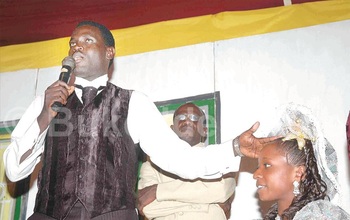
Celebs mourn Pastor Yiga’s death

By Julius Senyimba Reports of Pastor Augustine Yiga being bedridden with liver complications and meeting his creator have been ongoing for weeks. The full of life pastor who has been fighting for his life at Nsambya Hospital had some trusted media platforms pronounce him dead but his family came out strong using one of the […]
Source

NRM infiltrated by People Power

After bruising National Resistance Movement (NRM) party primaries in Sembabule district, efforts by the party's central executive committee (CEC) to reconcile the candidates has fallen flat.

Over the weekend, Maj Gen Jim Muhwezi, an NRM CEC member representing veterans, led a team to harmonize the situation in Sembabule but if the tone and accusations of the warring parties are anything to go by, his efforts are spinning into a harder knot!

At the centre of the tug of war is one camp led by two kingmakers; Foreign Affairs minister Sam Kutesa and Lwemiyaga MP, Theodore Ssekikubo. In the heated meeting, Kutesa said all the confusion stemmed from the adoption of lining up [as opposed to voting by secret ballot], and voting without a register.

Meanwhile, Joy Kabatsi, the state minister for Transport, said she went ahead to be nominated as an independent candidate because Ssekikubo "is an adherent to the People Power group."

She ruled out any possibility to stand down in favour of Ssekikubo and argued that her opponent subscribes to the People Power group led by Kyadondo East MP, Robert Kyagulanyi.

"I was with him in his house when he announced that he had quit NRM. He told me that he was tired, and had decided to quit. I told him that for me, I will remain and fight from within. Now that is the man you gave the NRM flag. He has been to Rwebitakuli and Mateete campaigning for Anifa Kawooya, and those areas are now [a strong base for] People Power," Kabatsi said during the meeting.

Kabatsi, who finished a distant third in the NRM primaries, further claimed that Ssekikubo recently hosted a meeting at his farm to launch People Power campaigns. She went on to claim that Sembabule Woman MP Anifa Kawooya, her longtime rival, is working for the People Power group on the basis of her association with Ssekikubo.

However, Kabatsi's allegation ruffled Kawooya's feathers, who questioned the essence of the reconciliation meeting based on empty divisive claims.

"You [Muhwezi] came here for reconciliation but if someone says that because I reconciled with Ssekikubo, I am, therefore, People Power, then what are we doing here?" Kawooya retorted. 

"I am the Woman MP and I know that Lwemiyaga is 96 per cent NRM. Do your research, add what these people [who stood against Ssekikubo] with what he got and go to Lwemiyaga to confirm by yourself. And if it means reconciling with anyone [be they] NRM supporters that defected to People Power, I will do it," Kawooya said.

She instead alleged that People Power had gained a stronghold Kutesa's Mawogola North and Mawogola South constituency currently held by a pro-Kutesa MP, Joseph Ssekabiito.

VOTE BUYING

Responding to Kabatsi's accusation that the winners of the NRM primaries bought their way to victory, Kawooya said that vote-buying is a common practice in the district.

"In Sembabule, voting is about giving. No one should complain because if I give [voters] Shs 10,000 and you give Shs 3,000, don't complain because that is what you can afford. If I give Shs 20,000 and another person gives a kilogram of sugar, where is the difference [as far as voter bribery is concerned]? Don't cry [because your opponent] has given more than you can afford," Kawooya rationalized.

She also suggested that even CEC members had parted with sweeteners to be elected. She added that NRM's biggest challenge in the district are the divisions, cliques, hatred and money.

"Right now, there is suspicion; we are suspicious of one another. There are fears that someone is funding candidates against the others," she said, adding that this is likely to cost President Museveni.

"Much as Museveni has support in Sembabule, his forces are divided. How are the divided forces going to mobilise for him?" Muhwezi called for calm, urging the politicians to end the bickering and name calling. He also spoke against vote-buying which he said is detested by the NRM.

"The practice of vote-buying is not encouraged; it is a criminal offence like stealing chicken. What NRM allows is giving facilitation like transport, lunch and airtime, but not vote buying which is an electoral offence," Muhwezi said.

Local leaders that spoke to The Observer intimated that the main reason for the infighting within NRM is that all protagonists are backed by powerful forces within the state security and are financially sound.

BACKGROUND

Politicians in Sembabule district have always been polarized but as NRM prepared to hold primaries, these divisions hit fever pitch and with the emergence of new players, there was a switch of allegiances with those formerly belonging to Kutesa's camp seeking comfort in Ssekikubo's group and the vice versa.

For instance, Kawooya was a longtime ally of Kutesa but decided to join the Ssekikubo-led camp as Kabatsi switched allegiance to Kutesa's group. Museveni's young brother, Godfrey Aine Kaguta (Sodo), a new entrant to Mawagola North, a constituency held by Kutesa, found peace in Ssekikubo's camp as he took on Kutesa's daughter, Shartsi Musherure.

Aine originally won the NRM primaries but Musherure appealed the result and the NRM election tribunal ruled in her favour. Consequently, the CEC decided that there was no time to reorganize the elections; so, both Aine and Musherure were all allowed to contest for the same seat as independent candidates.

This left the NRM without a flag bearer in Mawogola North. Elsewhere, candidates loyal to the Ssekikubo camp won the NRM primaries but the losers, dissatisfied with the way the primaries were conducted, declared themselves as independent candidates.

It is alleged that this confusion allowed opposition supporters to participate in the NRM primaries. It was observed that during the residual primary elections in Mawogola North, some of the voters that lined up wore masks bearing the People Power/National Unity Platform (NUP) insignia.


Source

Drugs, poverty blamed for violence in refugee camps

Displaced communities and those that host large numbers of refugees face high risks of violence, including sexual exploitation and abuse, according to a new World Bank assessment.

The recently-launched study, Gender-Based Violence and Violence Against Children: Prevention and Response Services in Uganda's Refugee-Hosting Districts shows that identifying negative impacts that could result from project activities or risks already existing in the communities, and embedding preventive measures could provide better protection and response services.

The assessment was conducted by the World Bank-financed Uganda Development Response to Displacement Impacts Project (DRDIP), a flagship Government of Uganda project being implemented under the Office of the Prime Minister (OPM).

According to the DRDIP assessment, the most common causes of violence against women and children in hosting and refugee communities, include poverty, substance abuse, discriminatory gender roles, and widespread acceptance of violence, which are reinforced by social norms. Physical violence, for example, is a widely accepted form of "disciplining" women and children.

School violence and the absence of child-friendly and accessible services for reporting and responding to violence against children further increases risk for boys and girls.

In his remarks during the launch, the director, DRDIP, Dr Robert Limlim, said the report has created the sense of awareness to the stakeholders on the question of violence against children in the violent sphere Dr Limlim said while this has been common, it has not been given attention.

"This report is not just a report of its kind. It outlines numerous complexities and provides us with a level of clarity on what we should do. It is not a light issue. It is a big gap we had forgotten in the field of displacement," Dr Limlim said.

Adding, "When you read this report, you will be able to see the horrorful experience of the undignified life that could be avoided. It is so emotional, really, colleagues, because these are lives of suffering".

Dr Limlim further said DRDIP will incorporate gender based violence efforts in the programme.

"We are going to integrate the GBV work on our programme and ensure that we shall hire a gender-based violence officer to breathe energy to the team," Dr Limlim said.

Many survivors of GBV and violence against children who live in host communities face various barriers to access essential services— health, psychosocial support, justice, and safety—due to gaps in the existing referral systems, poor case tracking and weak coordination among duty bearers, the report notes.

"This mapping of violence against children and broader gender-based violence (GBV) services is providing an important evidence base for strengthening services and defining DRDIP's role in appropriately responding to the risks," said Margarita

Puerto Gomez, Senior Social Development Specialist and World Bank Task Team Leader. According to UNHCR, 81% of Uganda's over 1.4 million refugees are women and children, who are at high risk of gender-based violence (GBV), including sexual exploitation and abuse (SEA), rape, forced and child marriage, and intimate partner violence (IPV).

The assessment, which was led by the DRDIP-OPM, ministry of Gender, Labour and Social Development in coordination with the UNHCR and development partners, provides several recommendations to strengthen protection against GBV and violence against children.

They include integrating GBV risk mitigation and prevention into the development response to forced displacement, strengthening and enhancing multisectoral services, including district- and local-level structures and scaling up evidence-based community violence prevention approaches to address GBV and violence against children risk factors aligned to district and community structures.

Measures could include grievance redress mechanisms, guidance, and tools to train local project stakeholders on GBV and violence against children risk assessment and mitigation.

Other recommendations include bridging the humanitarian-development divide between GBV and child protection programming, breaking conceptual "silent spaces" across GBV and child protection programming by, for example, training service providers to address multiple forms of violence and expanding existing programs to address common risks factors.

In line with the 2017 Comprehensive Refugee Response Framework (CRRF), the report further recommends reducing the gap between the humanitarian and development responses to GBV and violence against children-related risks by deliberately aligning violence prevention and response interventions with national systems.

"GBV and violence against children services offered by humanitarian partners can generate parallel structures for the provision of services, which are not necessarily aligned with or integrated into local and national protection systems" the report states.

It adds: "Prevention programs are fragmented and low in scale, and efforts to address risks factors through the socio-economic empowerment of women and girls are limited. Despite their common risk factors, programming for GBV and violence against children continue to operate in silos, each with its own funding streams and actors. Refugee host communities face similar challenges. Compared with a national average of 51%, the 2016 Uganda Demographic and Health Survey showed that 64% of women aged 15 to 49 in the refugee-hosting West Nile subregion report having experienced physical, sexual, or emotional violence perpetrated by their current or most recent spouse or partner. In response to the 2018 National Violence Against Children Survey, one in four girls and one in 10 boys reported having experienced sexual violence in the 12 months prior."


Source

Bebe Cool helps son respond to critique Eddie Ssendi

By Ahmad Muto Last week, social media extensively debated how media personality Eddie Ssendi bashed singer Bebe Cool's son Allan Hendrik arguing that he is not talented at all. He asked him to consider selling fish instead. Hendrik hit back asking Ssendi to check into a rehab facility. Well, Bebe Cool received Ssendi's criticism and […]
Source

Mobile money hacking: Shs 10bn stolen using 1,500 sim cards

Hackers who recently broke into the mobile money systems of Uganda's top two telecoms and two banks transferred and withdrew over Shs 10 billion using 1,500 fraudulently registered in the names of a local company.

A senior police detective at Criminal Investigations Directorate (CID) in Kibuli has intimated that hackers who illegally accessed the Pegasus system, an aggregator of Airtel, MTN, Stanbic bank and Bank of Africa fraudulently registered the sim cards in the name of a local company after allegedly accessing their data from a stationery shop. 

The detective said they have interrogated staff at the said company but established that none of its workers participated in the fraudulent registration of the sim cards that were used in the crime.

The cyber team established that it was the negligence of the company that gave chance criminals to fraudulently register sim cards in their name. 

"All our investigations have proven that this company is innocent into this crime. Hackers accessed vital registration details at a stationery shop. Many people are fond of leaving copies of their documents at stationery shops which is very risky. In this era of technology crime, you must be careful with where you leave your documents," a senior police detective said.

Early this month, Pegasus Technologies reported a case at Jinja road indicating that there was an unauthorized access to its system. MTN, Airtel and Stanbic bank later issued a joint statement acknowledging that their aggregator's systems had been illegally accessed.

Charles Twine, the spokesperson of the CID declined to comment on the new development. CID has released the five suspects who had been arrested in connection to the crime. Twine said they could not keep the suspects in cells since investigations are yet to be concluded by the independent digital investigators.

Source
Related Posts Plugin for WordPress, Blogger...

Popular Posts